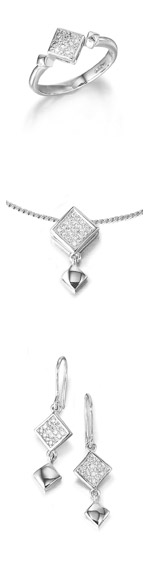
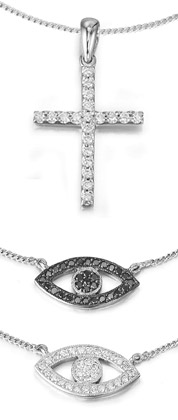
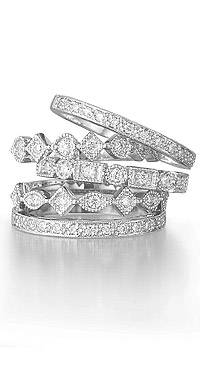
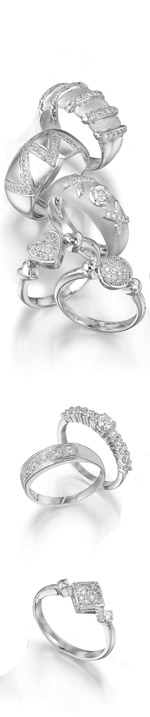
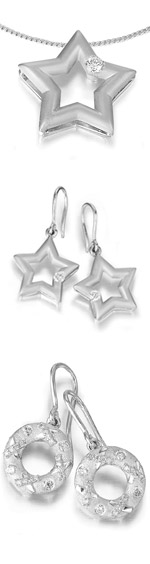
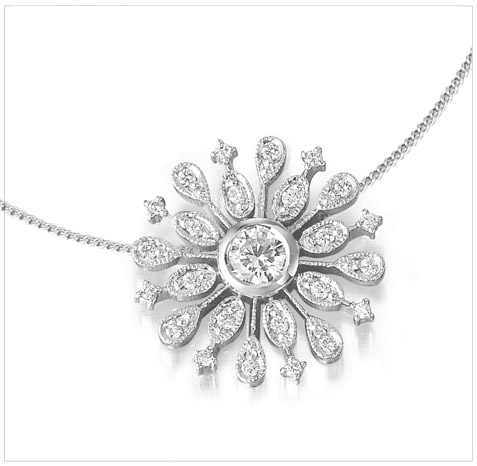
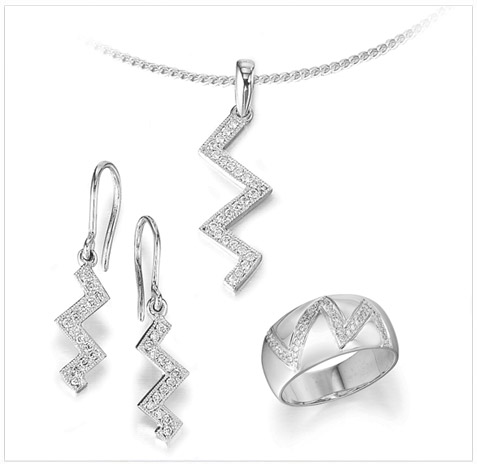
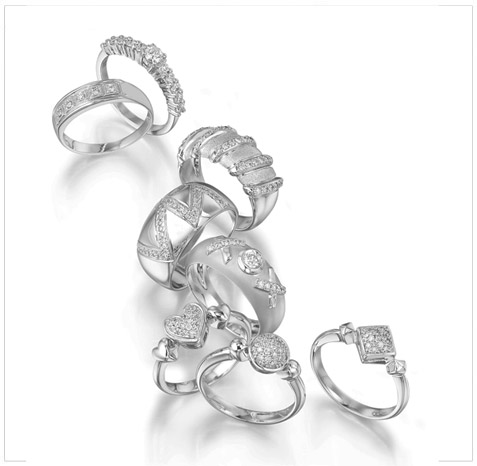
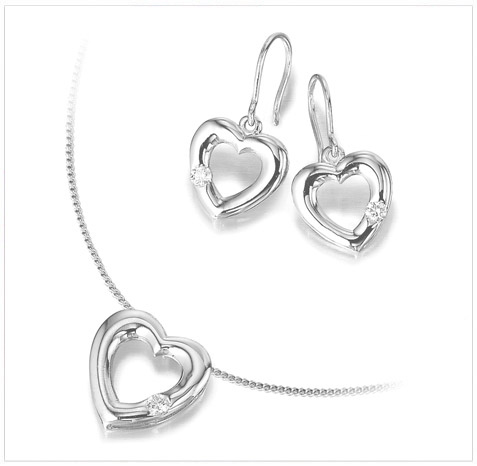
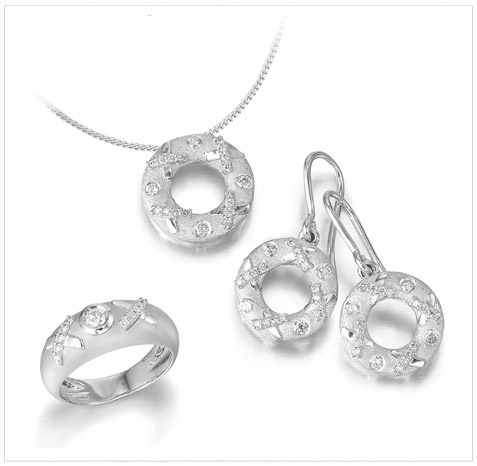
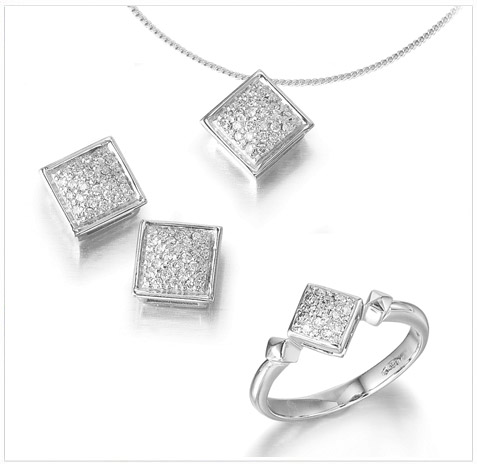
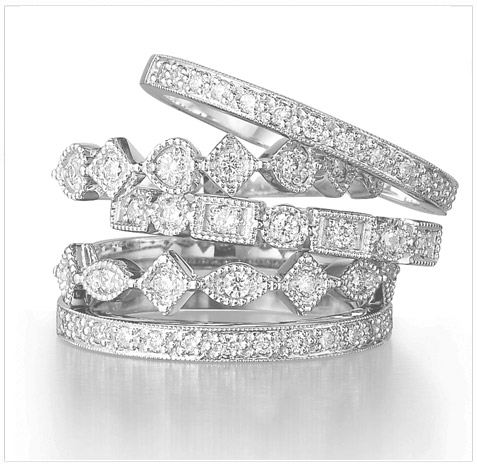
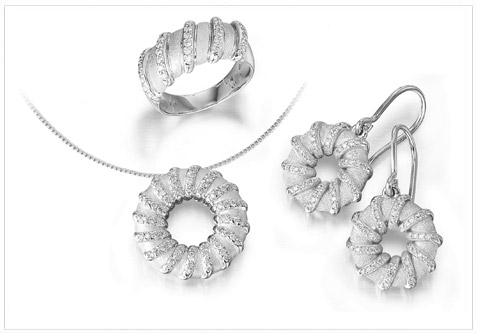
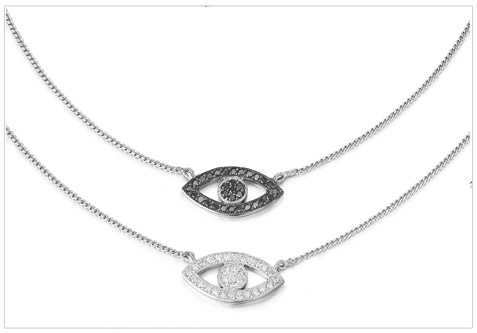
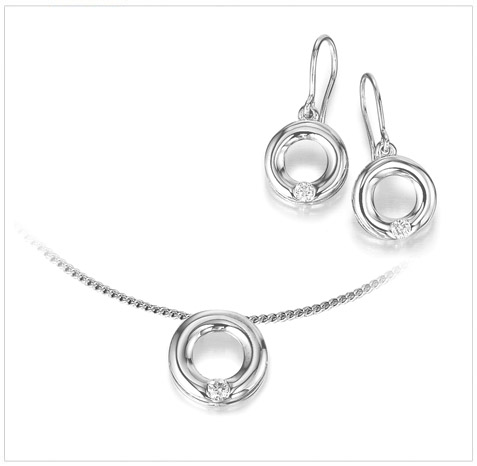
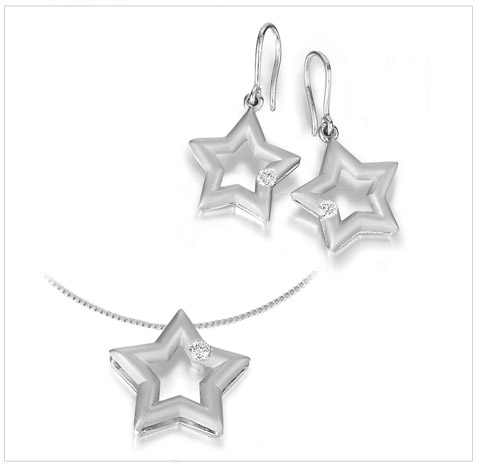
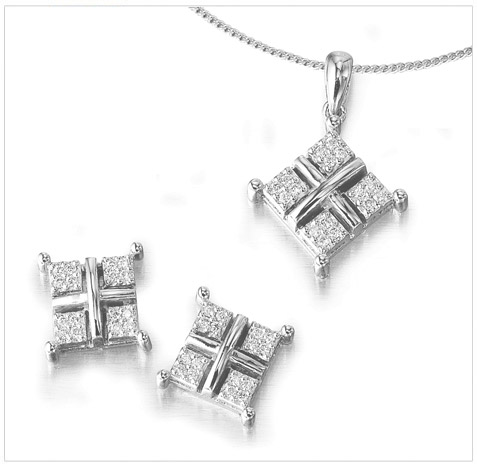
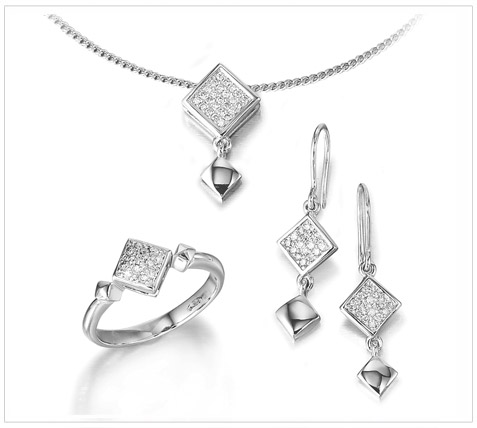
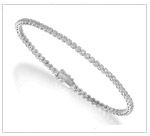
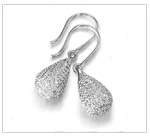
Diamond White is a diamond jewellery brand that represents quality, aspiration and glamour. It’s a brand that embodies affordable and accessible luxury. You proudly feel as if you are wearing an indulgent and bespoke jewellery creation without having to pay exorbitant prices. Diamond White is the sister of Tanzanite Blue and its name and image represents this unique association with an established and well-liked, quality tanzanite jewellery brand.
The diamonds, or as we like to call them ‘sparklies’, in all Diamond White’s creations are of superior quality, which means they sparkle enthusiastically in celebration and brighten any special moment or occasion. As the gemstone industry would term these ‘sparklies’, they are WHITE, pure, clean, lively and eternal. They dazzle with brilliance.
Each Diamond White jewellery piece is showered with attention to detail and love, as this piece of eternity is meant to exquisitely adorn the wearer and represent something significant and sentimental.
Diamond White is proudly South African in that the ‘pret-a-porter’ jewellery range’s original designs are created and manufactured locally. Our ‘sparklies’ are also sourced in South Africa.
Diamond White’s distinct designs are inspired by fashion-forward currents and by its intended wearers – women that embody timeless elegance who do not shy away from the excitement of contemporary trends. It’s not unusual to hear - Is that a Diamond White?
The strong focus on progressive, fresh and beautiful design along with comfortable wearability, differentiates this brand from others. Diamond White’s versatile creations are conceptualised with foresight to compliment Tanzanite Blue’s collections. They can be worn from daytime into the night and layered together as and when one is able to grow one’s collection. Follow us as we launch our fabulous new designs...
Let your life be filled with ‘sparklies’ and Diamond White!
Diamond C’s
When grading and pricing diamonds, the ‘4 C’ criteria must be considered.
- . Cut
. Clarity
. Color
. Carat weight
And then there's the "Fifth C":
. Confidence
CUT
Don't confuse diamond "cut" with "shape." Shape refers to the general outward appearance of the diamond (such as Round Brilliant, Asscher, Cushion, Princess, Emerald, Radiant, Oval, Pear, Marquise and Heart shape).
“Cut” refers to the diamond's reflective qualities. The quality of the ‘Cut’ influences how the diamond looks. A good cut gives a diamond its brilliance. The angles and finish of any diamond are what determine its ability to handle light, which leads to brilliance.
When a diamond is well-cut, light enters through the table and travels to the pavilion where it reflects from one side to the other before reflecting back out of the diamond through the table and to the observer's eye. This light is the brilliance we mentioned, and it's this flashing, fiery effect that makes diamonds so mesmerizing.
In a poorly cut diamond, the light that enters through the table reaches the facets and then 'leaks' out from the sides or bottom of the diamond rather than reflecting back to the eye. Less light reflected back to the eye means less brilliance. Thus good proportions are key.
Because cut is so important, several grading methods have been developed to help consumers determine the cut of a particular diamond. According to the Gemological Institute of America, these grades are:
- Ideal
- Premium
- Very Good
- Good
- Fair & Poor
CLARITY
Most diamonds contain some inner flaws, or inclusions, that occur during the formation process. The visibility, number and size of these inclusions determine what is called the clarity of a diamond. Diamonds that are clear create more brilliance, and thus are more highly prized, and priced.
Diamonds are graded for clarity under 10x loupe magnification. Grades range from Flawless (diamonds which are completely free of blemishes and inclusions), to Included 3 (diamonds which possess large, heavy blemishes and inclusions that are visible to the naked eye).
- F
Flawless: No internal or external flaws. Extremely rare.
- IF
Internally Flawless: no internal flaws, but some surface flaws. Very rare.
- 零. VVS1-VVS2
Very Very Slightly Included (two grades). Minute inclusions very difficult to detect under 10x magnification by a trained gemologist.
- VS1-VS2
Very Slightly Included (two grades). Minute inclusions seen only with difficulty under 10x magnification.
- 零. SI1-SI2
Slightly Included (two grades). Minute inclusions more easily detected under 10x magnification.
For grades F through to SI, a diamond’s clarity grade has an impact on the diamonds value, not on the unmagnified diamond’s appearance.
0. I1-I2-I3
Included (three grades). Inclusions visible under 10x magnification as well as to the human eye. We do not recommend buying diamonds in any of these grades.
COLOUR
When jewelers speak of a diamond's colour, they are usually referring to the presence or absence of colour in white diamonds. Colourless diamonds are the most desirable since they allow for the most refraction of light and emit more sparkle and fire. Off-white diamonds absorb light, inhibiting brilliance.
The formation process of a diamond ensures that only a few, rare diamonds are truly colourless. Thus the whiter a diamond's colour, the greater its value.
A diamonds colour grade ranges from D through to Z. Diamonds graded D through F are naturally the most valuable and desirable because of their rarity. Diamonds graded G through I show virtually no color that is visible to the untrained eye.
And while a very, very faint hint of yellow will be apparent in diamonds graded J through M, this color can often be minimized by carefully selecting the right jewelry in which to mount your diamond.
CARAT WEIGHT
A carat is a unit of measurement, it's the unit used to weigh a diamond. Because large diamonds are found less commonly than small diamonds, the price of a diamond rises exponentially to its size.
The word "carat" is taken from the carob seeds that people once used in ancient times to balance scales. So uniform in shape and weight are these little seeds that even today's sophisticated instruments cannot detect more than three one-thousandths of a difference between them.
The Fifth C: CONFIDENCE
Diamond White creations are all accompanied by a diamond guarantee, which is your assurance that you are buying authentic diamonds with the stipulated quality.
................................................................................................
THE KIMBERLEY PROCESS
Diamond White adheres to the Kimberly process.
The Kimberley Process Certification Scheme, popularly known as KPCS, is a process introduced by United Nations General Assembly. The KPCS document sets out the requirements for controlling rough diamond production and trade. It is designed to certify the origin of rough diamonds from sources which are free of conflict fueled by diamond production. The process was established in 2003 to prevent diamond sales from financing rebellious movements and to prevent conflict diamonds from ntering legitimate trade. The certification scheme aims at preventing these "blood diamonds" from entering the mainstream rough diamond market. It was set up to assure consumers that by purchasing diamonds they were not financing war and human rights abuses. The Kimberley process started when Southern African diamond-producing states met in Kimberley, South Africa, in May 2000, to discuss ways to stop the trade in ‘conflict diamonds’ and ensure that diamond purchases were not funding violence.
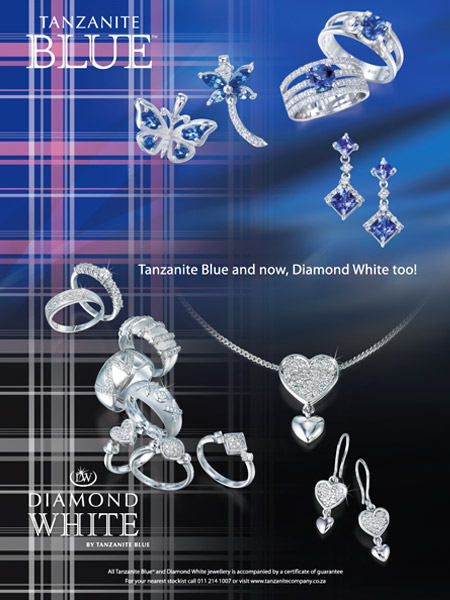
Download our advert 01 as an adobe PDF - 1.90MB
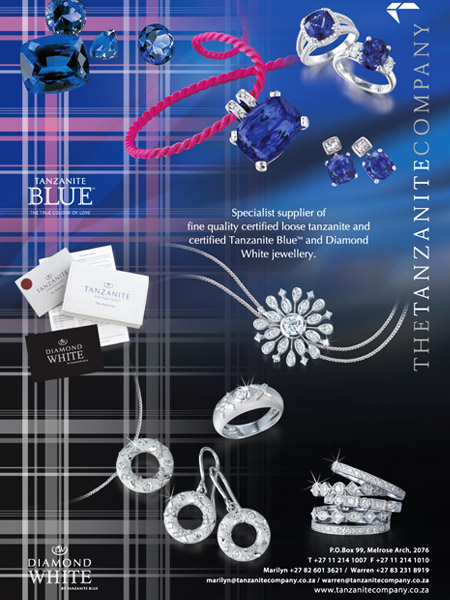
Download our advert 02 as an adobe PDF - 4.40MB
|